
Interview
Telum Talks To: Miranda Bryce, Managing Director / Partner of The Mint Partners
As Japan experiences a surge in tourism, with Australians flocking to its shores in record numbers, the country faces new opportunities and challenges.
On the occasion of World Tourism Day, we spoke with Miranda Bryce, Managing Director / Partner of The Mint Partners, to better understand this shift, what it means for the travel industry, as well as to find out more about the agency's recent expansion into Japan.
Why has The Mint Partners decided that now was the time to open in Japan?
Japan took me by surprise. When I was transferred to Club Med in Hokkaido, I was unprepared for the life-long love affair that awaited me. What was supposed to be one ski season turned into four years from the snowy mountains to the islands of Okinawa, as my love grew for a land that opened my mind, like nowhere else I’d been.
Now, as I continue to travel back to Japan every six months or so, all it takes is for me to see the evenly spaced luggage spin around the baggage carousel, their handles all facing outwards, and that love comes gushing back. So, 15 years after moving back to Australia, it is a dream come true to be launching MINT's Japan services.
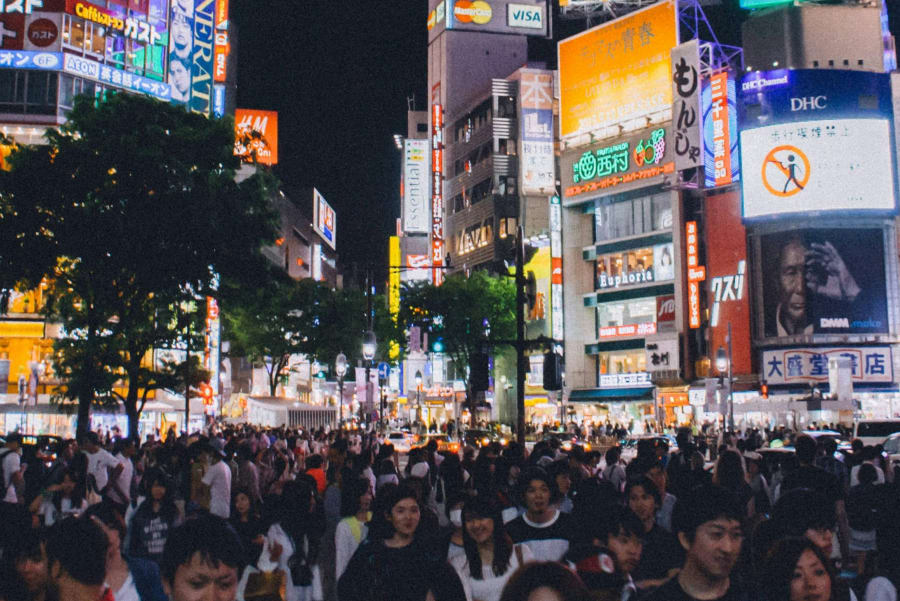
There is no denying Japan is the hottest destination for Australians right now, and we’re not the only ones. The country recorded over 25 million tourists in 2023, with December 2023 over 8 per cent higher than the pre-pandemic boom in December 2019.
613,100 Australians visited Japan in 2023. This March, Australian tourists entering Japan were up by 87 per cent compared to March 2019, seeing Australia finish the year as the 8th highest source markets for Japan and the second biggest long-haul market, behind the US. Pretty big numbers for a small market.
So what’s put Japan so high on the travel agenda for Aussies?
Japan's economy faces a scary path ahead when you consider that it has the lowest birth rate in the world. The ageing population and the strain that puts on the country is partly responsible for the decline in domestic tourism, as many Japanese nationals conserve discretionary expenses.
In the past, Japan did not need to rely on international tourism as much as it now does, and that increased need has led the nation to focus on 'welcoming' aspects for foreigners. Often labelled a monoculture, and with a long history of remaining fairly closed to outside intervention, the campaign for the Tokyo Olympics included a large-scale re-look at English signage, accessible rail systems, credit card acceptance and English language skills for many jobs.
There is also no denying that Australia now deems almost anything Japanese as immediately 'cool'.
While cars have long been Japan’s greatest export, the popularity of fashion and lifestyle brands like Uniqlo, Muji and COMME des GARÇONS, alongside beauty brands like SK-II and Shiseido has seen an increase in sales in Australia, in line with Japan’s overall popularity.
Anyone who has met me knows that my love for Japan is at its fullest when I am eating Japanese food. And to my delight, Sydney and Melbourne have been in their omakase era over the past five years. The Japanese restaurant industry has increased its revenue to $1.9 billion over the past five years in Australia.
Which came first - the yakitori or the egg?
Many retailers are citing travel as the path to discovering Japanese brands, driving ongoing sales after their return home. And interestingly, speaking to a number of hotel managers in Japan, many attribute their increasing number of Australian guests to the popularity of Japanese restaurants and brands spurring that desire to travel. So it seems there exists a lovely self-perpetuating cycle of revenue between the two - Japanese brands at home and experiences abroad.
That cycle is no doubt helping to feed the big expansion plans by hotel groups Marriott, IHG and Hyatt, who have introduced an incredible number of new properties to their Japan portfolios.

How is Japan coping with the surge in interest and visitors?
Going from locally-focused to a top international tourism destination in such a short timeframe hasn't allowed the country time to keep up, and the flow on means that tourism-adjacent businesses are suffering. Language barriers aside, the foreign customer eats and travels differently. On a smaller scale, a number of hotels and restaurants have stopped taking overseas bookings after experiencing a string of no-shows and restaurants have now needed to start mandating the order of at least a drink and a meal each.
On a larger scale, this unpreparedness for a tourism rise is being evidenced at some major landmarks. Mount Fuji recently began charging for climbers in an effort to restrict numbers, tuna auctions have closed to tourists at the now relocated Tokyo fish market, and the famed 'geisha neighbourhood' of Gion recently closed some of its streets.
In fact, many foreigners report being 'locked out' of certain establishments due to their nationality, as the country works out how to balance a new demanding customer without losing the local experience that has made them desirable.
With flocks of new visitors centring around the same few things, the perception becomes that the country is 'full'. In fact, 'over-tourism' is a term already being used by media to describe magical places like Kyoto.
At present, a lot of the information available to tourists in the media, online and on social media lacks the diversity and sophisticated understanding of the country that helps the spread of tourism across different paths.
What is the answer from a comms and marketing perspective?
Cultural understanding will be key to attracting visitors to a diversity of experiences within Japan. As Aussies and Kiwis begin to plan their third and fourth holiday to Japan, the appetite is already growing for paths less travelled. As sushi, ramen, cherry blossoms and maid cafes are crossed off our 'to do' lists, there becomes more room for different experiences, even within the major cities. Sake bars under the train tracks in Koenji, baseball games, the beach at Zushi or cool-kids suburbs like Higashiyama.
Seasonal travel is also an opportunity where we can play a role in a more sustainable growth industry for the country. On my last visit to Tokyo and surrounds, each hotel and ryokan I visited told me that January was their lowest month - a time when Australians pack their bags in droves and many flock north for the snow, skipping Tokyo and other calmer places.
So what is MINT's focus for its new services in Japan?
Marketing Japanese brands and experiences to Australians and New Zealanders via tourism consultation. For example, trailing the experience or product and looking over marketing channels to offer advice for attracting an ANZ customer; media and KOL relations for the promotion of Japanese brands and experiences to the ANZ market; partnerships and collaborations between countries.
With our new services in Japan, a country we hold a deep love for, we would like to play our role in helping Australians and New Zealanders to imagine the next chapter of a diverse, respectful and sustained tourism flow to Japan.
On the occasion of World Tourism Day, we spoke with Miranda Bryce, Managing Director / Partner of The Mint Partners, to better understand this shift, what it means for the travel industry, as well as to find out more about the agency's recent expansion into Japan.
Why has The Mint Partners decided that now was the time to open in Japan?
Japan took me by surprise. When I was transferred to Club Med in Hokkaido, I was unprepared for the life-long love affair that awaited me. What was supposed to be one ski season turned into four years from the snowy mountains to the islands of Okinawa, as my love grew for a land that opened my mind, like nowhere else I’d been.
Now, as I continue to travel back to Japan every six months or so, all it takes is for me to see the evenly spaced luggage spin around the baggage carousel, their handles all facing outwards, and that love comes gushing back. So, 15 years after moving back to Australia, it is a dream come true to be launching MINT's Japan services.
There is no denying Japan is the hottest destination for Australians right now, and we’re not the only ones. The country recorded over 25 million tourists in 2023, with December 2023 over 8 per cent higher than the pre-pandemic boom in December 2019.
613,100 Australians visited Japan in 2023. This March, Australian tourists entering Japan were up by 87 per cent compared to March 2019, seeing Australia finish the year as the 8th highest source markets for Japan and the second biggest long-haul market, behind the US. Pretty big numbers for a small market.
So what’s put Japan so high on the travel agenda for Aussies?
Japan's economy faces a scary path ahead when you consider that it has the lowest birth rate in the world. The ageing population and the strain that puts on the country is partly responsible for the decline in domestic tourism, as many Japanese nationals conserve discretionary expenses.
In the past, Japan did not need to rely on international tourism as much as it now does, and that increased need has led the nation to focus on 'welcoming' aspects for foreigners. Often labelled a monoculture, and with a long history of remaining fairly closed to outside intervention, the campaign for the Tokyo Olympics included a large-scale re-look at English signage, accessible rail systems, credit card acceptance and English language skills for many jobs.
There is also no denying that Australia now deems almost anything Japanese as immediately 'cool'.
While cars have long been Japan’s greatest export, the popularity of fashion and lifestyle brands like Uniqlo, Muji and COMME des GARÇONS, alongside beauty brands like SK-II and Shiseido has seen an increase in sales in Australia, in line with Japan’s overall popularity.
Anyone who has met me knows that my love for Japan is at its fullest when I am eating Japanese food. And to my delight, Sydney and Melbourne have been in their omakase era over the past five years. The Japanese restaurant industry has increased its revenue to $1.9 billion over the past five years in Australia.
Which came first - the yakitori or the egg?
Many retailers are citing travel as the path to discovering Japanese brands, driving ongoing sales after their return home. And interestingly, speaking to a number of hotel managers in Japan, many attribute their increasing number of Australian guests to the popularity of Japanese restaurants and brands spurring that desire to travel. So it seems there exists a lovely self-perpetuating cycle of revenue between the two - Japanese brands at home and experiences abroad.
That cycle is no doubt helping to feed the big expansion plans by hotel groups Marriott, IHG and Hyatt, who have introduced an incredible number of new properties to their Japan portfolios.
How is Japan coping with the surge in interest and visitors?
Going from locally-focused to a top international tourism destination in such a short timeframe hasn't allowed the country time to keep up, and the flow on means that tourism-adjacent businesses are suffering. Language barriers aside, the foreign customer eats and travels differently. On a smaller scale, a number of hotels and restaurants have stopped taking overseas bookings after experiencing a string of no-shows and restaurants have now needed to start mandating the order of at least a drink and a meal each.
On a larger scale, this unpreparedness for a tourism rise is being evidenced at some major landmarks. Mount Fuji recently began charging for climbers in an effort to restrict numbers, tuna auctions have closed to tourists at the now relocated Tokyo fish market, and the famed 'geisha neighbourhood' of Gion recently closed some of its streets.
In fact, many foreigners report being 'locked out' of certain establishments due to their nationality, as the country works out how to balance a new demanding customer without losing the local experience that has made them desirable.
With flocks of new visitors centring around the same few things, the perception becomes that the country is 'full'. In fact, 'over-tourism' is a term already being used by media to describe magical places like Kyoto.
At present, a lot of the information available to tourists in the media, online and on social media lacks the diversity and sophisticated understanding of the country that helps the spread of tourism across different paths.
What is the answer from a comms and marketing perspective?
Cultural understanding will be key to attracting visitors to a diversity of experiences within Japan. As Aussies and Kiwis begin to plan their third and fourth holiday to Japan, the appetite is already growing for paths less travelled. As sushi, ramen, cherry blossoms and maid cafes are crossed off our 'to do' lists, there becomes more room for different experiences, even within the major cities. Sake bars under the train tracks in Koenji, baseball games, the beach at Zushi or cool-kids suburbs like Higashiyama.
Seasonal travel is also an opportunity where we can play a role in a more sustainable growth industry for the country. On my last visit to Tokyo and surrounds, each hotel and ryokan I visited told me that January was their lowest month - a time when Australians pack their bags in droves and many flock north for the snow, skipping Tokyo and other calmer places.
So what is MINT's focus for its new services in Japan?
Marketing Japanese brands and experiences to Australians and New Zealanders via tourism consultation. For example, trailing the experience or product and looking over marketing channels to offer advice for attracting an ANZ customer; media and KOL relations for the promotion of Japanese brands and experiences to the ANZ market; partnerships and collaborations between countries.
With our new services in Japan, a country we hold a deep love for, we would like to play our role in helping Australians and New Zealanders to imagine the next chapter of a diverse, respectful and sustained tourism flow to Japan.
Telum Media
Database
Not yet a client and interested in learning more about the benefits of a Telum Media database subscription?
Book a DemoPR News
Stay informed with our weekly regional PR News Alerts featuring the latest PR industry moves and insights.